
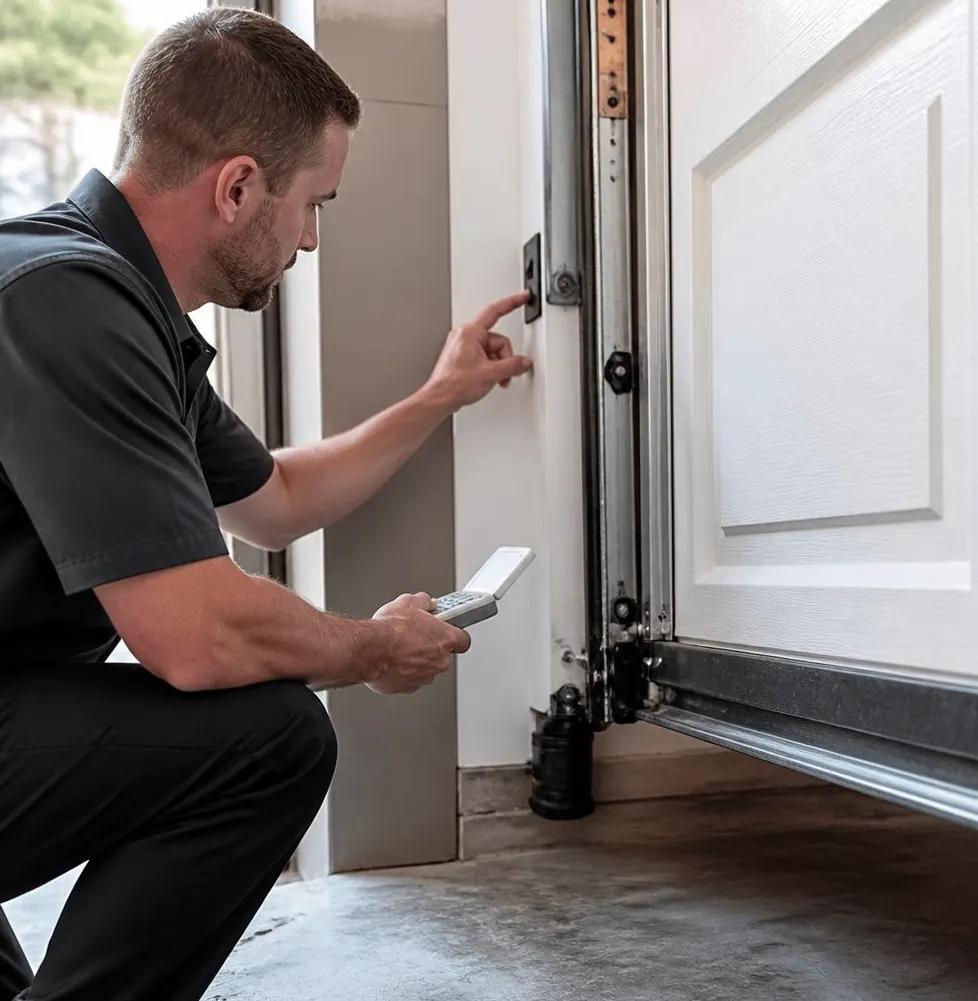
The short answer
A seasonal tune-up that covers lubrication, hardware, tracks, balance, and the auto-reverse safety test takes about twenty minutes and catches most of the problems that turn into weekend emergencies. Do it four times a year, ideally when the seasons change, and you'll head off the squeaks, drags, and misalignments that come from Naperville's big swings between humid summers and icy, salt-splashed winters.
Why a seasonal routine matters here
A garage door is a 200-400 pound moving assembly held together by steel springs, cables, rollers, and hinges, all mounted in an unheated space that goes from humid and swollen in July to dry, cold, and salt-sprayed in January. Metal contracts, lubricant thickens, rubber seals stiffen, and hardware that was snug in spring can work loose by fall. None of that is dramatic on its own, but it adds up, and a door that's been ignored for a year is far more likely to need a technician on short notice than one that's been checked four times.
Tools you'll need
- A step stool or short ladder
- A socket wrench or adjustable wrench
- A can of garage-door-specific lithium or silicone spray lubricant (not WD-40, which washes out and attracts grit)
- A rag or paper towels
- A level (a smartphone level app works fine)
- A soft-bristle brush or old toothbrush for tracks
The 20-minute routine
- Wipe down and inspect the tracks. Run a rag along both vertical and horizontal tracks to clear dust, cobwebs, and the gritty residue that road salt and winter grime leave behind. Look for dents, rust, or spots where the track pulls away from the wall.
- Lubricate the moving parts. Spray rollers, hinges, the torsion spring, and the track rollers glide on. A light coat is enough; wipe off any excess so it doesn't collect dust. This single step prevents most of the grinding and squealing noises homeowners call about.
- Tighten visible hardware. Using your wrench, snug up the bolts on the track brackets and hinges. Vibration from daily use loosens these gradually, and a loose bracket is one of the more common reasons a door starts running crooked.
- Check the weatherstripping. Look at the rubber seal along the bottom of the door and the vinyl strips on the sides. If it's cracked, flattened, or pulling away, note it for replacement — a failed seal lets in humid summer air or winter draft and moisture, which affects everything from your garage temperature to rust on tools stored nearby.
- Test the balance. With the door closed, disconnect the opener by pulling the release cord, then lift the door halfway by hand. It should stay in place on its own. If it drifts down or shoots up, the spring tension is off.
- Test the auto-reverse safety feature. Place a 2x4 flat on the ground where the door closes. Close the door with the opener; it should reverse immediately on contact. Then test the photo-eye sensors by waving a hand through the beam while the door is closing — it should stop and reverse.
- Listen and watch a full cycle. Open and close the door once more and pay attention to grinding, jerking, or uneven movement on one side versus the other. That's often the earliest warning sign of a bigger problem.
Where the line is: DIY versus technician
Everything above is safe for a homeowner to do with basic tools. What's not a DIY job is anything involving the torsion or extension springs themselves. If the balance test showed the door drifting, if a spring looks stretched, gapped, or rusted through, or if a cable looks frayed, stop there. Springs are under extreme tension and have caused serious injuries when handled without the right equipment. Likewise, leave full track realignment, opener circuit board issues, and panel replacement to a technician — these jobs usually require specialized tools or carry real risk if done wrong.
When to call Naperville Garage Door Pro
If your seasonal check turns up a door that won't hold its balance, a spring that looks worn, or an auto-reverse that doesn't trigger, that's the point to call in a professional rather than keep testing it yourself. We handle Spring Replacement and full Garage Door Maintenance visits for homeowners throughout Naperville, Aurora, Lisle, Bolingbrook, Plainfield, Wheaton, Downers Grove, and Warrenville, and we can usually get a technician out same-week to inspect, repair, or re-tension a door before a small issue turns into a stuck door on a freezing morning.
If your twenty-minute check raises any flags, or it's just been a while since anyone looked at your door's springs and hardware, call Naperville Garage Door Pro for honest, local service you can schedule around your day.