
Getting Your Garage Door Ready for Winter
The short answer: check the weatherstripping, lubricate the moving parts, test the spring balance, and clear out any road salt or grime before the first hard freeze. Cold makes every weak point in a garage door worse — metal contracts, grease thickens, rubber seals stiffen and crack. A door that's been limping along all fall can seize up or fail outright the first morning it drops below 20 degrees. None of this takes more than an hour, and doing it now beats doing it during a January cold snap with the door stuck open.
Check the Weatherstripping and Bottom Seal
Walk around the door and look at the rubber seal along the bottom and the strips along the sides. After a humid summer and a few months of sun exposure, this rubber is often brittle, flattened, or torn in spots. Press on it — if it doesn't spring back, it's done its job for the year and needs replacing before winter. A worn seal doesn't just let in cold air; it lets in meltwater and wind-driven snow that can freeze to the garage floor overnight, which is how people end up finding their door frozen shut. Replacement seal kits are inexpensive and a reasonable DIY job for most homeowners with basic tools.
Lubricate Before the Cold Sets In
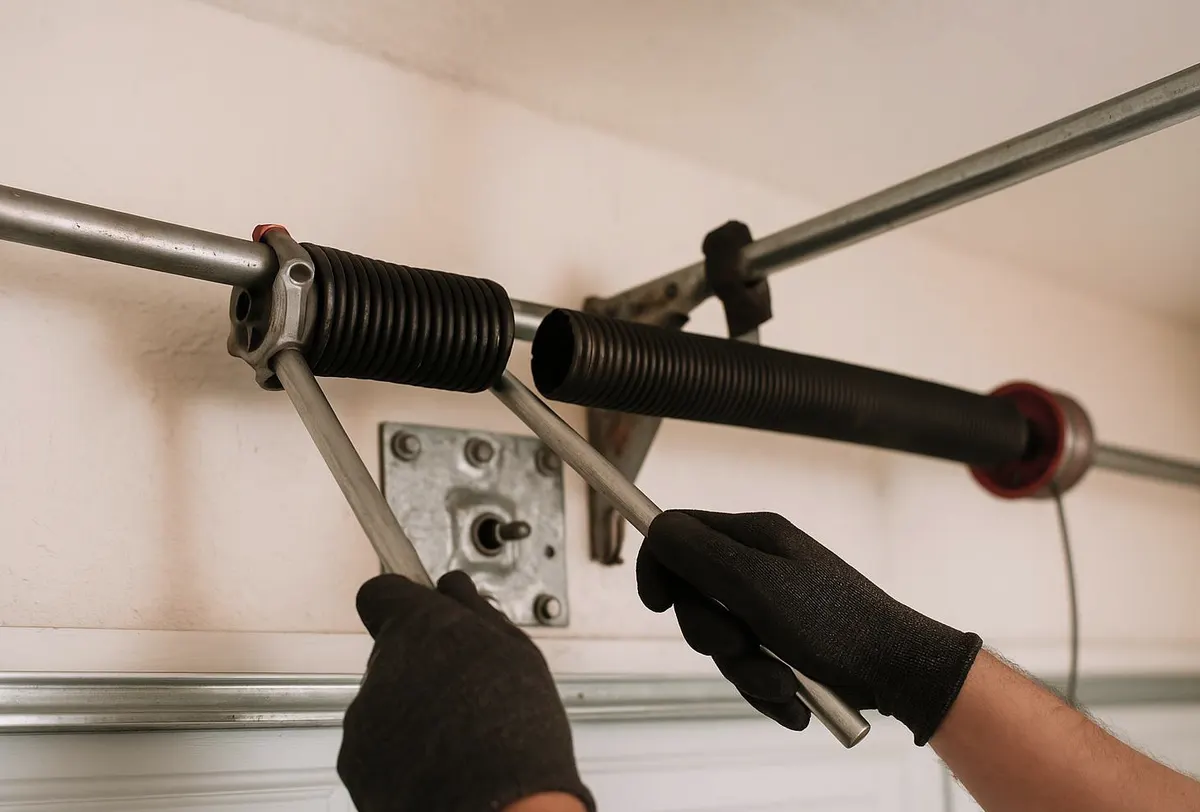
Hinges, rollers, and the torsion spring itself all need fresh lubricant going into winter. Cold thickens old grease and grime into something closer to paste, which adds resistance right when the opener motor is already working harder in low temperatures. Use a garage-door-specific silicone or lithium spray, not WD-40 — WD-40 is a solvent and cleaner, not a long-term lubricant, and it can actually strip the grease that's already there. Hit the rollers, hinges, the spring, and the track where the rollers ride. Skip spraying the nylon rollers themselves if your door has them; lubricate the shaft instead.
Test the Spring Balance
Springs are the single most common winter failure point, and cold is part of why. Metal contracts in low temperatures, which adds measurable extra strain to a spring that's already near the end of its lifespan. To check balance, pull the release cord to disconnect the opener, then lift the door by hand halfway. It should stay roughly in place. If it drops like a stone or shoots upward, the spring tension is off and it's compensating poorly — which means it's one cold morning away from snapping. This isn't a DIY adjustment; torsion springs are under enough tension to cause serious injury if mishandled. If the balance test fails, that's a call for spring replacement before winter, not after a door gets stuck halfway open in a January storm.
Deal With Road Salt and Winter Grime
Once salt trucks are out, every car pulling into the garage tracks in a mix of salt, sand, and slush that ends up on the tracks and at the base of the door. That residue is corrosive and it doesn't evaporate the way plain water does — it sits and eats at metal hardware over the course of the season. A quick wipe-down of the tracks and bottom panel every few weeks keeps salt from working into hinges and rollers. It's a small habit, but it's the difference between hardware lasting several winters and hardware rusting out by spring.
Opener and Sensor Care
Cold weather is hard on opener batteries, particularly if you run a battery backup system or a remote with an aging battery. Test both now, because a weak battery that limps along in October often fails outright once temperatures drop. Wipe down the safety sensor eyes near the floor on each side of the track — these are low enough to collect condensation, dust, and in some cases a fine film of road salt tracked in on tires, and a dirty sensor can cause the door to refuse to close or reverse unexpectedly.
Think About Insulation If the Garage Feels Like an Icebox
If the garage shares a wall with living space, or if pipes run through it, an uninsulated door can mean real temperature swings inside the house and a genuine freeze risk for any plumbing in there. Insulated door panels or an add-on insulation kit for an existing door both help, and they cut down on the condensation that forms on cold metal panels during humid stretches — condensation that otherwise drips down and refreezes at the base of the door overnight.
When to Call Naperville Garage Door Pro
If the balance test shows a spring under too much or too little tension, if the door shudders or groans going up in cold weather, or if weatherstripping is too far gone to replace yourself, that's when it makes sense to call in a technician rather than troubleshoot further. We handle spring replacement safely with the right tools and tension gauges, and we do full garage door maintenance visits that cover lubrication, hardware inspection, and balance adjustment in one trip — the kind of once-a-year tune-up that catches small problems before a cold snap turns them into a stuck door and a missed morning.
If your garage door is sticking, sagging, or just sounds different than it did in August, get it looked at before winter does the rest of the damage. Call Naperville Garage Door Pro today to schedule a pre-winter inspection anywhere in Naperville, IL.